Nosebleeds, 'Verified Resale,' and the $900 Sit-Down: A Field Guide to Pop's Ticket Class System
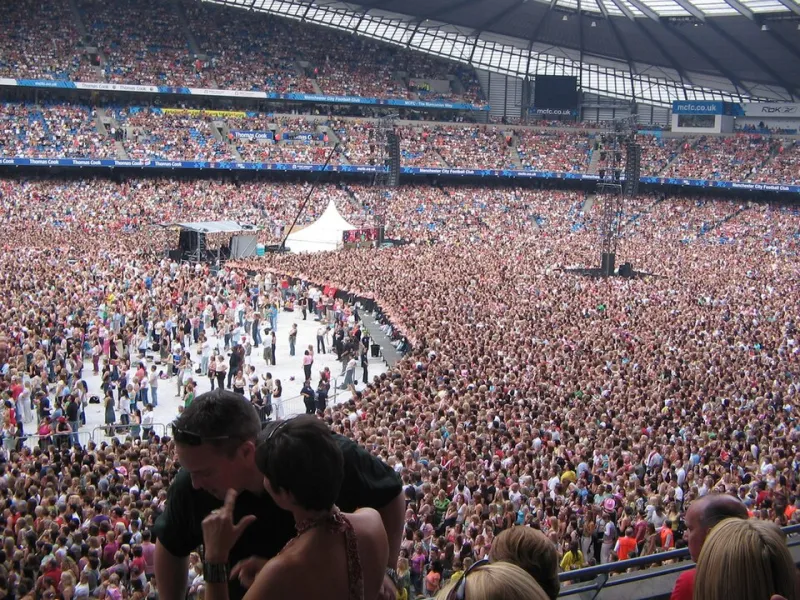
Photo: Andy Buckingham from Bristol, England, CC BY 2.0, via Wikimedia Commons
Let's talk about the seating chart at your favorite pop star's next tour, because it's no longer a seating chart. It's a socioeconomic map.
Somewhere in the upper reaches of that stadium, there's a seat selling for fifteen bucks. Fifteen. Less than the parking. Less than the nachos. And directly below it, on the floor, sits a seat listed at $940 — labeled "verified resale," as if the word verified makes the number feel less like a hostage situation.
Both seats see the same show. Neither seat makes sense. Welcome to the great ticket caste system.
A Brief Tour of the Castes
The Nosebleed Faithful. The $15 tickets are real, and they're not charity — they're capacity insurance. Venues would rather fill every seat at scrap prices than project a half-empty bowl onto the broadcast. The nosebleed crowd gets the vibe, the singalongs, and a view of the artist roughly the size of a Skittle. They also, historically, have the most fun. There's no pressure at $15. Nobody's doing math during the ballad.
The Mid-Tier Realists. The $150–$300 section. These are the people who saved up, skipped two brunches, and still had to sit through a four-screen captcha that felt like a vision test administered by a hostile DMV. This is the backbone of the touring economy, and they know it, and they're tired.
The Verified Resale Aristocracy. Here's where it gets weird. "Verified resale" is the industry's polite term for tickets someone else bought and is now flipping — often at multiples of face value, with the platform taking a cut on the way in and the way out. The buyer isn't paying for a seat. They're paying for immediacy, plus a commission to a system that created the scarcity in the first place. It's a toll booth on a road the toll company paved.
The VIP Package Gentry. And then there are the packages. $1,200 for early entry, a soundcheck glimpse, a laminate that says "GOLD," and a tote bag of merchandise you'll never open. Some packages genuinely deliver — a real soundcheck, a real moment. Others are, functionally, a $900 line-skipping fee with confetti. If your VIP package costs more than three months of rent, the tote bag should carry you.
Dynamic Pricing: Pop's Quietest Villain
Now for the part nobody puts on the poster: dynamic pricing — the airline-style model where ticket prices flex up and down based on demand, in real time, the moment sales open.
On paper, it sounds fair. High demand, high price, right? Except here's the trick: demand is highest in the first ten minutes, when the most devoted fans — the ones who set alarms, who joined the fan club presale, who did everything right — are in the queue. Dynamic pricing doesn't punish scalpers. It punishes punctuality. The reward for being your artist's biggest fan is a surge charge.
The result is a quiet redistribution of money from the most loyal to the most infrastructural. And because it happens inside the official checkout flow — no shady parking-lot dealer, just a clean, branded price tick-up — it doesn't even feel like a scandal. It feels like weather.
Who's Actually Paying for What
Quick math on where your $200 ticket goes: a chunk to the artist's guarantee and production costs (those LED screens don't pay for themselves), a chunk to the venue, a stack of fees to the ticketing platform — service fees, facility fees, order processing fees, fees that have fees — and, increasingly, a slice skimmed off the resale market.
The artist blames the platform. The platform blames the market. The venue blames production costs. Everyone blames "the fees" like they're a natural phenomenon and not a spreadsheet someone wrote.
Survival Tactics: Seeing Your Fave Without Financial Ruin
PopPolar's official field guide:
1. Buy the $15 seat and shut up about the view. You're there for the show, not an eye exam. Bring binoculars like your grandfather at the ballpark. Nobody has ever regretted a cheap ticket to a great night.
2. Never buy in the first fifteen minutes of a general onsale. Dynamic pricing peaks early. The panic-buyers set the market. Let them.
3. Wait out the resale market. Resale prices for pop tours routinely drop in the final 48 hours as sellers face the reality of empty seats. It's a game of chicken, and time is on your side.
4. Check the venue's box office directly. Some venues release held seats at face value day-of. It's the industry's least advertised secret.
5. Skip the VIP unless the artist is actually in the room. A laminate is not a memory.
The bottom line: the ticket class system only works if the castes accept their assignments. The nosebleed faithful figured it out years ago. Fifteen dollars, a Skittle-sized pop star, and the best singalong in the building.
That's not the cheap seat. That's the smart one.