Hold Music for Your Errands: The Secret Cabal Scoring Every Target Run
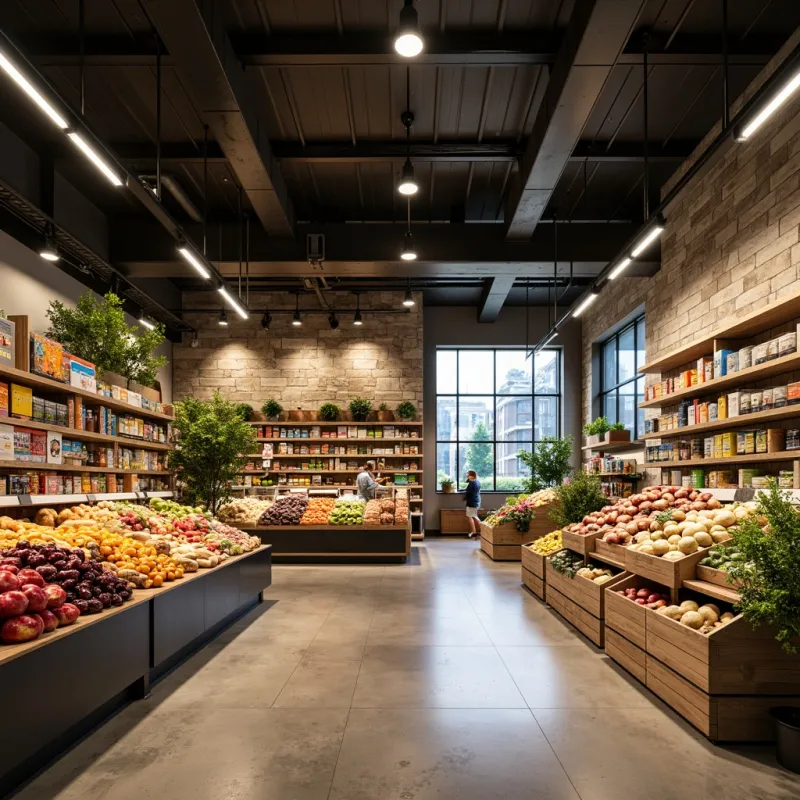
Photo: supermarket aisle speakers ceiling store interior, via gstatic1.promeai.pro
You know the moment. You're three items deep in a Target run that was supposed to be toothpaste and is now trending toward $187, and then it hits you: the speakers just cued up a Hall & Oates song so perfectly timed to your impulse-buy high that it feels personal.
It is personal. Sort of. You've just been scored — not by fate, not by the store manager's iPod, but by an invisible industry of music supervisors, background-music vendors, and increasingly, algorithms with opinions.
There Is a Whole Company for This (Several, Actually)
That playlist at your local grocery store isn't an accident, and it's definitely not some teenager's aux cord. Retail chains typically license their in-store audio from specialized music services — the business-to-business cousins of Spotify that most people will never hear of. These vendors curate hundreds of channels organized by brand personality: 'upbeat contemporary,' 'sophisticated lounge,' 'cozy acoustic,' and the ever-popular 'songs your mom likes that won't get us sued.'
Yes, sued. Every song playing over the produce section requires a public performance license. That's why small shops play the same five royalty-safe covers of 'Lovely Day' — and why the big chains have entire legal teams making sure your fitting-room soundtrack doesn't turn into a copyright incident.
The curation itself is weirdly scientific. Vendors analyze foot traffic, time of day, even weather. Slow tempo in the afternoon to calm the crowd, brighter tempos during rush periods to keep the line moving. Studies in the field have suggested music tempo can nudge how fast people shop — which means somewhere, a person with a music degree is being paid to make you walk through electronics slightly faster.
The Algorithm Has Tastes Now
The old guard was humans with headphones. The new guard is machine learning models trained on brand data, churning out playlists that are almost right in a way that haunts you. It knows the store wants 'warm and nostalgic,' so it serves you a song that sounds like the memory of a song. It's the musical equivalent of a stock photo of friends laughing at a picnic.
The results are uncanny. Every Chick-fil-A plays the same genre of gentle acoustic wistfulness, like the soundtrack to a commercial where a family embraces in slow motion. Every Forever 21 of your youth blasted the same EDM-adjacent bangers at a volume that suggested the clothes were optional. The HomeGoods saxophone universe is real and it is everywhere.
We Held an Audition
Naturally, we decided the system needs oversight. We pitched songs for America's most iconic shopping moments and graded the algorithm's current picks. Committee of one (me), snacks provided by the impulse-buy aisle.
The moment: You're leaving the store at 9:58 PM, bags in hand, the doors whooshing open.
- Algorithm's pick: some soft-rock deep cut from 1983.
- Our pitch: 'Free Fallin'' — Tom Petty. Duh. You are, quite literally, free. Grade: A-. Petty never misses.
The moment: You've been trapped in the checkout line for eleven minutes behind a price check.
- Algorithm's pick: a lo-fi acoustic cover of a song you like, which is somehow worse than the original.
- Our pitch: 'I Will Survive' — Gloria Gaynor. Solidarity. Grade: A. Empowerment through checkout purgatory.
The moment: You spot someone you vaguely know from high school across the aisles and must execute evasive maneuvers.
- Algorithm's pick: 'Everybody Wants to Rule the World' — which, fine, is honestly perfect, because everyone in this store is pretending they came in for one thing.
- Our pitch: none needed. The algorithm cooked. Grade: A+. We were wrong to doubt the machine.
The moment: Self-checkout says 'unexpected item in the bagging area' for the fourth time.
- Algorithm's pick: anything. It doesn't matter. Nothing can reach you here.
- Our pitch: the dial-up internet sound, for thematic consistency. Grade: F for everyone involved.
The Verdict
Here's the thing: as much as we joke about the retail playlist industrial complex, there's something weirdly comforting about it. The same song finding you in a grocery store in Ohio and a pharmacy in Arizona is its own kind of national unity. It's the muzak social contract — nobody chose it, everybody accepts it, and occasionally it hands you a moment of genuine joy between the cereal aisle and the register.
So the next time a power ballad hits at the exact second you decide you deserve that candle, know that somewhere, an algorithm — or a very tired music supervisor — saw you coming.
And honestly? The committee approves.