Secondhand Standing Ovation: How to Fake Having Watched Awards Season

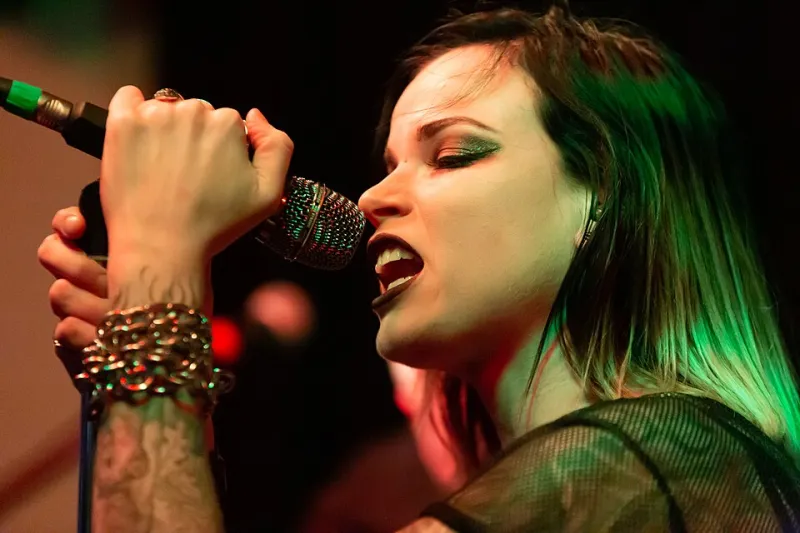
Photo: Gareth James , CC BY-SA 2.0, via Wikimedia Commons
Let's be honest with each other for a second. The average awards show runs roughly three and a half hours. The average American's attention span, per every article your aunt shares on Facebook, is now shorter than a goldfish's. The math has not worked in years. Nobody is watching these things live. Everybody is performing having watched them live.
Welcome to the great annual American tradition of secondhand awards season — where your entire cultural education comes from a group chat named something unprintable, a TikTok with 2.1 million views titled "everything that mattered (in 47 seconds)," and one coworker who won't stop saying "did you SEE her speech?" when you both know you didn't.
Here's how to do it like a pro.
The Meme Is the Message
By 11:47 PM on awards night, the internet has already decided what happened. Not reported on — decided. A producer tripping on a cable becomes a national storyline. A winner's surprised face becomes three reaction memes and a Halloween costume. If a moment doesn't produce a meme, it effectively did not occur. This is the first law of awards physics.
Your job, as a non-viewer, is simple: ride the meme wave. You don't need context. Context is for people with Hulu Live. When the group chat lights up with a screenshot of a very famous woman looking visibly unbothered, you simply respond "SHE'S SO REAL FOR THAT" and move on with your life. Accuracy is not the assignment. Vibes are the assignment.
The Group Chat Is Your Eyewitness News Team
Every group chat contains one person who watched the whole thing. You know who they are. They're the one live-texting in lowercase, increasingly unhinged: "okay the montages are criminal" ... "she's presenting next everyone shut up" ... "I'm crying and I don't even like this movie."
This person is your CNN, your ESPN, and your emotional support human all in one. Do not thank them. Do not acknowledge their service. Just quietly harvest their reactions, wait 20 minutes, and repost the same sentiment to a different chat as your own take. This is called content arbitrage and it is completely legal.
Pro tip: the person who watched is always exhausted and slightly embarrassed by 1 AM. Their final messages — the ones where the defensiveness creeps in ("it was actually a good show this year!!") — are the most reliable signal that the broadcast is over and you can safely go to bed.
The 47-Second Recap: A Masterclass in Compression
Some heroic stranger will edit the entire ceremony down to under a minute, set to a trending audio, captioned something like "the only parts that mattered." This video will be more accurate, more entertaining, and more emotionally complete than the actual broadcast. It will have better pacing. It will have a joke in it. NBC spent $50 million on that telecast; a 19-year-old with CapCut beat it in four hours.
Watch the recap twice. Once for information, once for the comments, which function as a crowdsourced footnotes section. Someone in those comments will explain the one moment you didn't get. Someone else will start a fight about a snub that you can now reference at brunch. The comment section is your graduate seminar. Attend it.
Which Moments Are Worth Pretending You Saw Live
Not all fake viewership is created equal. Ranking, from most to least worth the lie:
Tier One — Lie Immediately: Any acceptance speech where someone cried, called out their mom, or appeared to go slightly off-script. Any winner whose face suggested they were as surprised as you are. These are the water-cooler moments, and "I gasped" is a low-risk, high-reward claim. Nobody can prove you gasped.
Tier Two — Lie Casually: Red carpet chaos. A bold fashion choice, a couple making their debut, someone wearing something that gets described as "a moment" by people paid to say that. "I saw the dress" is the safest lie in awards season because the dress is everywhere by morning anyway.
Tier Three — Do Not Lie: Technical awards, the montages, anything involving the word "in memoriam," and the host's monologue. If you claim you watched the monologue live, the one person in your office who actually watched the monologue live will catch you. There is always one. They have notes. They've been waiting.
When Is It Safe to Admit You Skipped It
Timing matters. Here's the official disclosure window:
Night of: Never confess. You are a viewer tonight. Act accordingly.
Next morning: Still risky. The recaps are everywhere and comparing notes is the whole culture. Hold the line.
48 hours later: The confession window cracks open. By now, everyone who watched is annoyed at themselves for staying up, and admitting "I genuinely did not watch a second of it" lands not as ignorance but as self-care. You've been rebranded from slacker to sage.
One week later: Fully safe. In fact, admitting you skipped it now signals superiority. "Oh, I just waited for the recap" is the awards-season equivalent of saying you don't own a TV. People will respect you and quietly resent you.
One month later: Don't bring it up at all. Awards discourse has a shelf life of about nine days, and mentioning it now marks you as someone with nothing going on.
The Beautiful Truth
Here's the thing nobody says out loud: you didn't miss anything. The show was too long, the speeches were mostly fine, and the one moment everyone's talking about? You've now seen it eleven times, from eleven angles, with eleven different captions — which means you've experienced it more thoroughly than the people who watched live and saw it once, from the back of a commercial break.
Secondhand awards season isn't cheating. It's curation. The lurkers, the recap-watchers, the group-chat vampires — we're not missing the culture. We're just consuming it at a reasonable bitrate.
See you next ceremony. We'll all be pretending again.